
A floor-standing enclosed cabinet tester with internal multi-position stations, built to verify coupling performance of electronic modules under controlled, shielded working conditions.
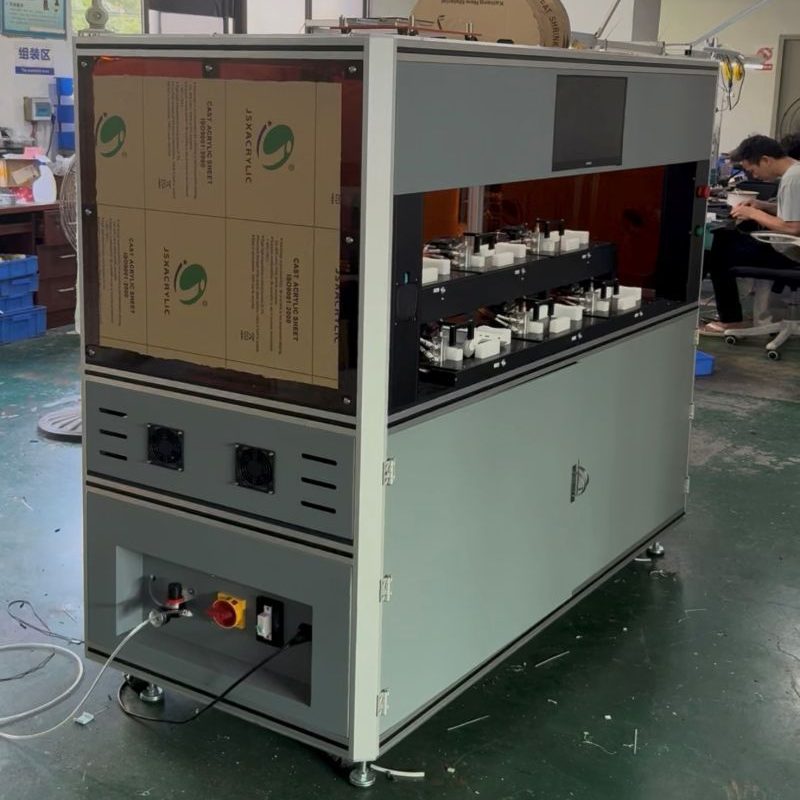
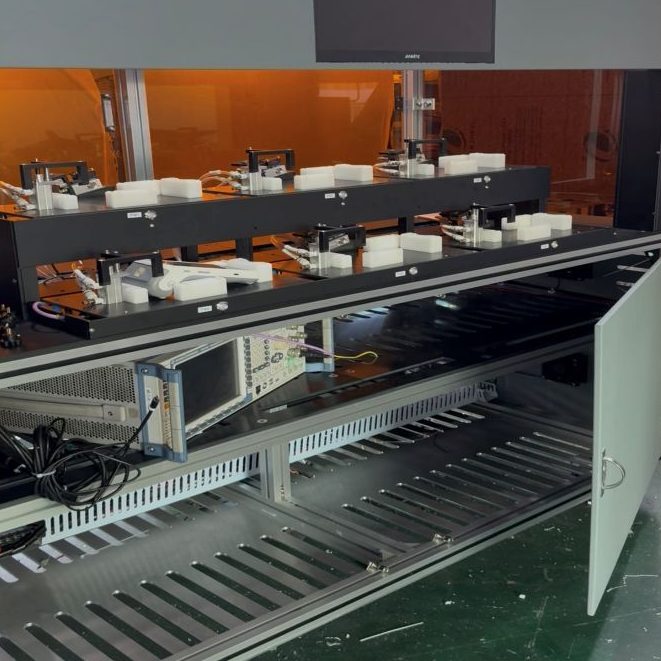
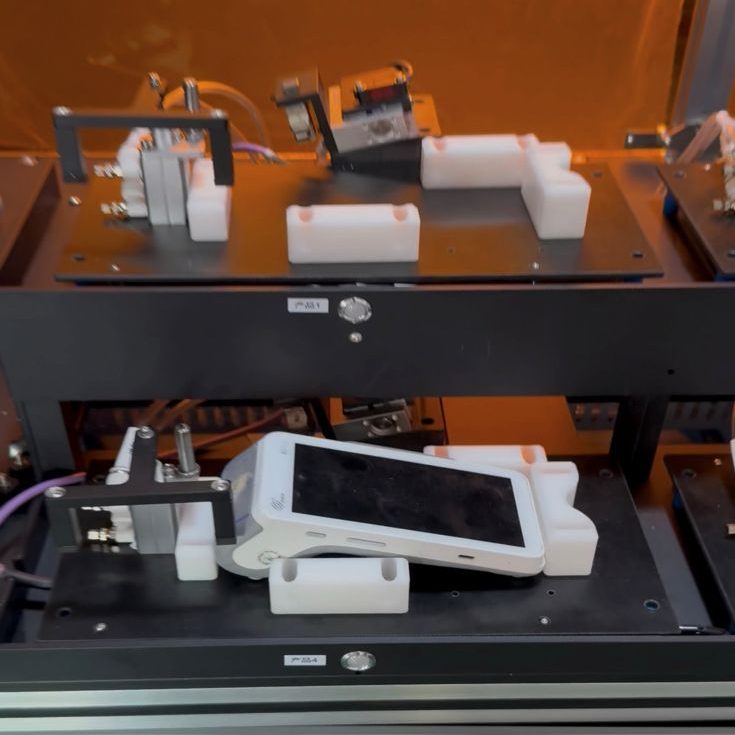
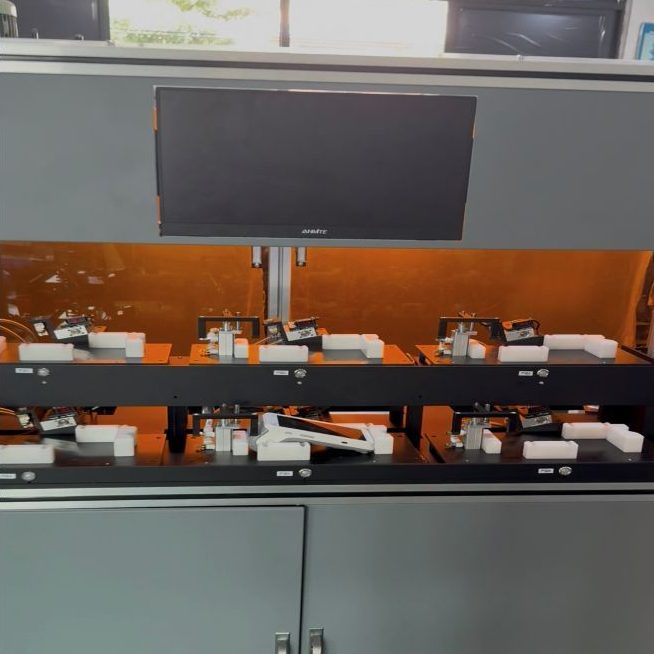
This cabinet-style coupling fixture moves testing off the open bench into a dedicated enclosed station. The upper section holds several internal probe jigs, each securing a module for coupling-related functional checks; a touch screen on the side runs the test sequence and displays results. The enclosed front door and side panels reduce external interference and protect operators from moving parts, while a status tower and E-stop are mounted at the cabinet front. Cooling fans, power distribution and internal wiring are integrated into the lower cabinet, making it a standalone test station for production QC rather than a simple benchtop jig.
Key Features
- Floor-standing enclosed cabinet structure with lockable front door
- Multiple internal test stations for batch module coupling inspection
- Integrated touch screen for test sequence control and result display
- Side panels and door reduce external interference during coupling tests
- Status tower, emergency stop and power switch on the front panel
- Built-in cooling fans and internal wiring for a standalone test station
Applications
- Coupling performance verification of wireless or communication modules
- Batch testing of electronic assemblies in a shielded, enclosed environment
- Production QC stations requiring a dedicated standalone tester
- Modules sensitive to external signal interference during functional checks
FAQ
Q: What kind of coupling test is this fixture used for?
It is configured for module coupling checks such as signal pairing, connection validation or related functional matching; the exact test points depend on the product.
Q: How many modules can be tested at once?
The internal cabinet holds several independent stations; the number is customized according to module size and required cycle time.
Q: Does the cabinet provide shielding against external signals?
The enclosed panels and door reduce interference; for RF-sensitive tests, additional shielding materials can be integrated into the cabinet interior.