
A five-position manual FCT fixture array with independent toggle clamps and digital readouts, built for batch PCB functional inspection in mass production QC.
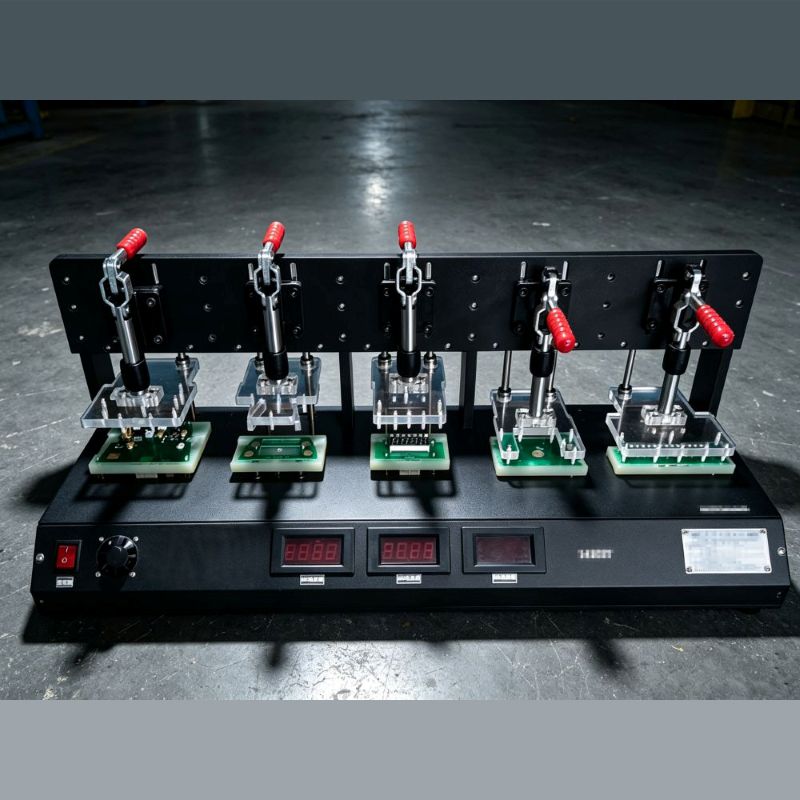
This long-base fixture bank mounts five separate manual test stations on one shared black base. Each station has its own red-handle toggle clamp, probe assembly and board cradle, so operators can load and test five PCBs through one organized workbench setup. Digital readout modules on the front panel display test status or measured values per position, and the shared base keeps wiring and controls tidy. The layout suits products that run in high volume but do not require pneumatic pressing, offering a low-cost way to raise manual testing throughput.
Key Features
- Five independent manual test positions on a single shared base
- Separate toggle clamps and probe sets for each PCB
- Front-panel digital readouts for per-station test indication
- Compact long-bench layout for organized batch inspection
- Custom cradles and probe layouts matched to target boards
- No compressed air required for clamp operation
Applications
- Mass production batch testing of similar small PCBs
- Manual QC stations where high throughput is needed without pneumatics
- Parallel inspection of five units in one operator cycle
- Production lines with repeated board models and steady output
FAQ
Q: Can one station test a different board from the other four?
The stations are independent, so one cavity can be customized separately, though most banks use the same board across all five for balanced cycle time.
Q: How does the digital readout help operators?
Each readout shows the result or measured value for its own station, so operators can identify a failed position without checking every board manually.
Q: Is this fixture suitable for automated line integration?
It is a manual benchtop bank; automated integration would require pneumatic cylinders, sensors and a PLC upgrade.