
A double-cavity pneumatic FCT jig with two side-by-side test positions, air-driven pressing action, built-in counter and E-stop for efficient electronic module functional testing.
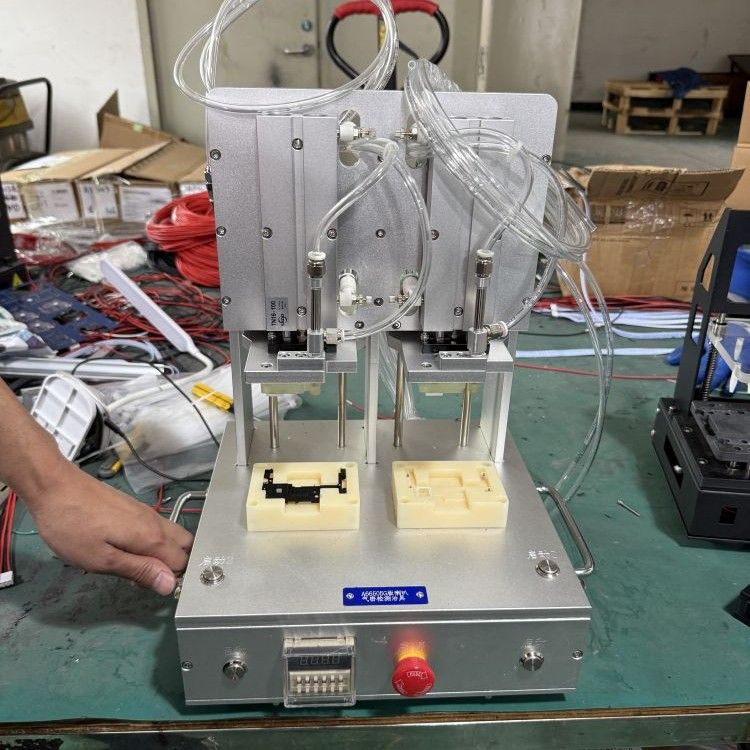
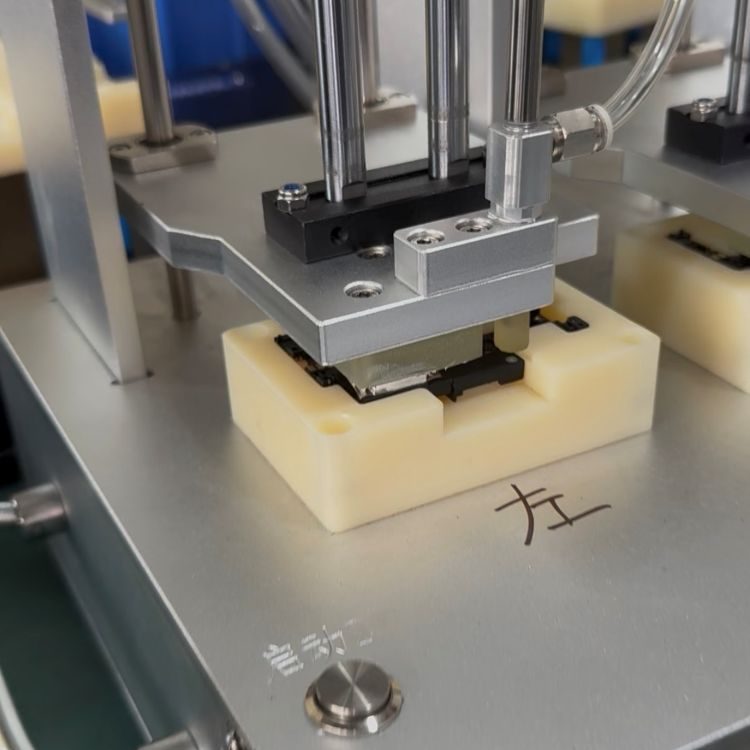
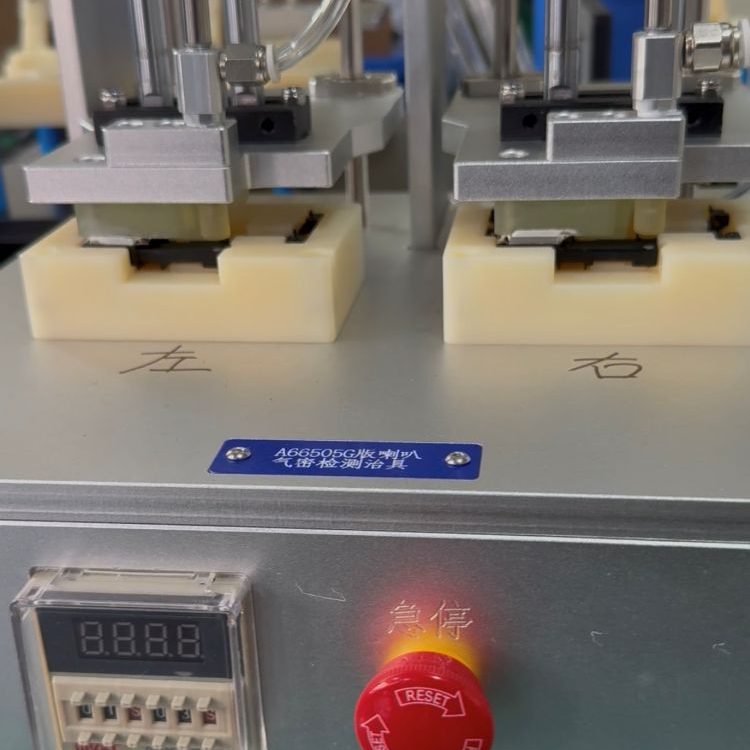
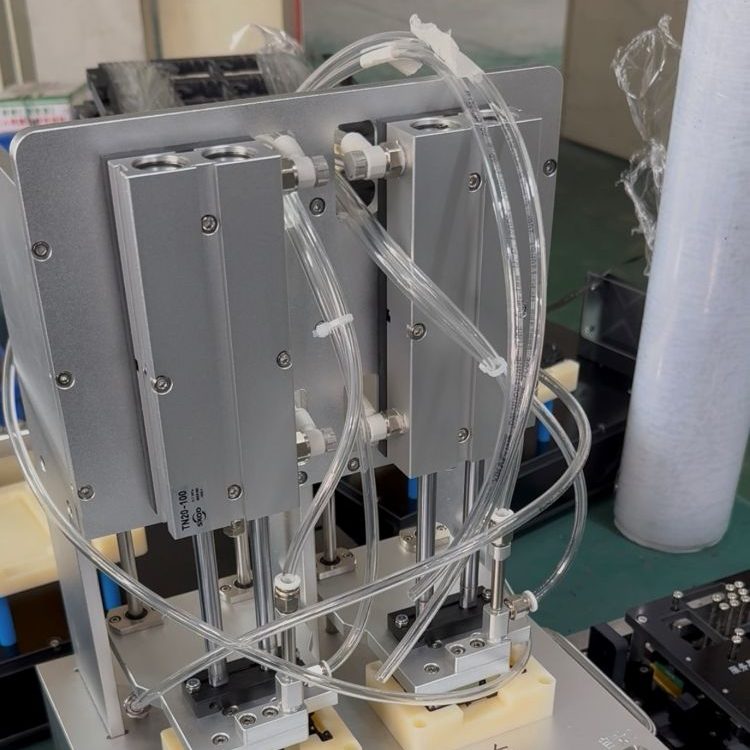
This dual-station pneumatic fixture loads two modules in separate cavities; the air cylinders press the probe assemblies down for testing in parallel. The silver aluminum frame supports two independent probe heads and pneumatic lines, while a counter and red E-stop sit on the front base. The two cavities can carry the same product for higher throughput, or be arranged for two related variants of the same assembly. Transparent tubing and fittings are routed along the frame, and locating fixtures hold each module in place during the cycle.
Key Features
- Two side-by-side cavities for parallel testing of two modules
- Pneumatic cylinder-driven probe pressing on each station
- Aluminum frame with independent probe heads and air line routing
- Built-in production counter and emergency stop on the front panel
- Custom cavity cradles matching the module outline and connector positions
- Higher throughput than a single-station manual or pneumatic jig
Applications
- Parallel functional testing of two identical electronic modules
- Production lines where cycle time needs to be improved with two stations
- Plastic-cased electronic assemblies held in custom cavity cradles
- Mid-to-high volume QC stations with available compressed air supply
FAQ
Q: Can the two stations test different products?
They can be arranged for two variants, but most dual-station designs run the same product in both cavities to balance cycle time and probe layout.
Q: Is the pressing action synchronized between stations?
The cylinders can be triggered together or separately depending on the control design; separate valves allow independent station operation.
Q: What is the advantage over two single manual jigs?
The pneumatic dual-station design provides consistent pressing force and faster cycles, with a shared counter and control panel instead of two manual clamps.