
A cost-effective manual FCT jig built on a phenolic bakelite frame, using a hand toggle clamp to press probes onto the PCBA for stable, low-budget functional testing.
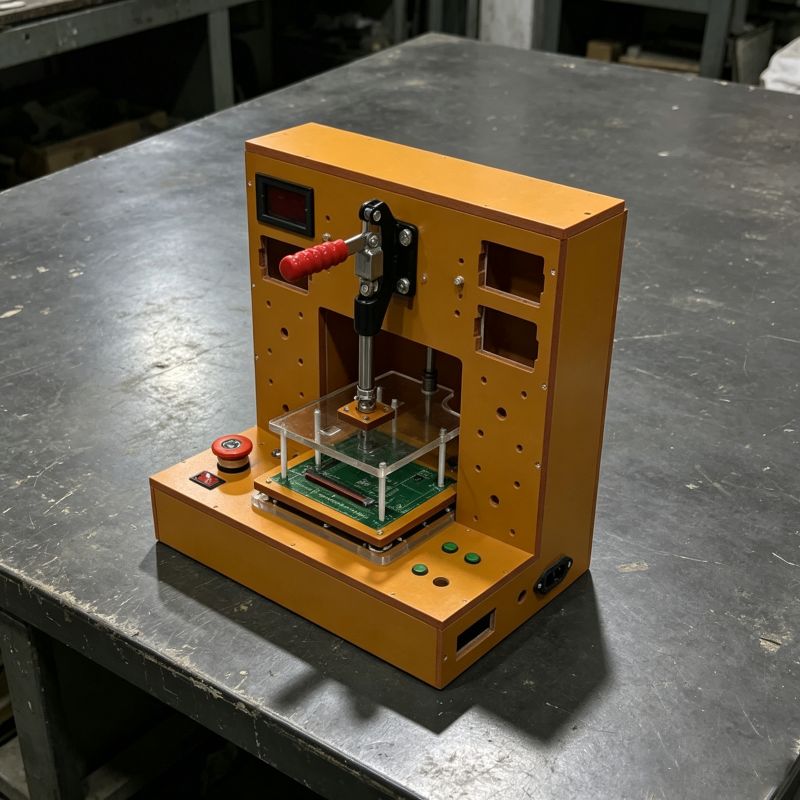
This bakelite manual jig is chosen for projects that need reliable probe contact without the cost of a pneumatic system. The orange phenolic laminate frame resists wear and provides a rigid support for the clamp, probe plate and locating pins. The operator lowers the red-handle toggle clamp to press the acrylic plate and spring probes onto the board; green start buttons and an E-stop are arranged on the front panel. The compact upright frame takes little bench space, making it suitable for small production runs, repair stations and cost-sensitive assembly environments.
Key Features
- Phenolic bakelite frame for rigidity, wear resistance and low cost
- Hand toggle clamp operation, no pneumatic supply required
- Acrylic pressure plate distributes clamp force evenly across the board
- Compact upright benchtop frame with small footprint
- Custom locating pins and probe layout for the target PCBA
- Front-panel start buttons and emergency stop for basic safety control
Applications
- Cost-sensitive small batch PCBA functional testing
- Repair, rework and troubleshooting workstations
- Prototype and pilot-run board verification before mass production
- Bench testing in workshops without compressed air infrastructure
FAQ
Q: Why is bakelite used instead of aluminum?
Phenolic bakelite offers good rigidity and electrical insulation at a lower material and machining cost, ideal for manual low-to-mid volume jigs.
Q: Is this jig suitable for high-speed mass production?
It is best suited to small batches and manual stations; high-volume lines usually choose pneumatic or automated fixtures for faster cycles.
Q: Can the clamp force be adjusted?
The toggle clamp travel and probe plate are set during design; clamp force can be tuned with stop screws and probe spring selection.